Begin with what you can see.
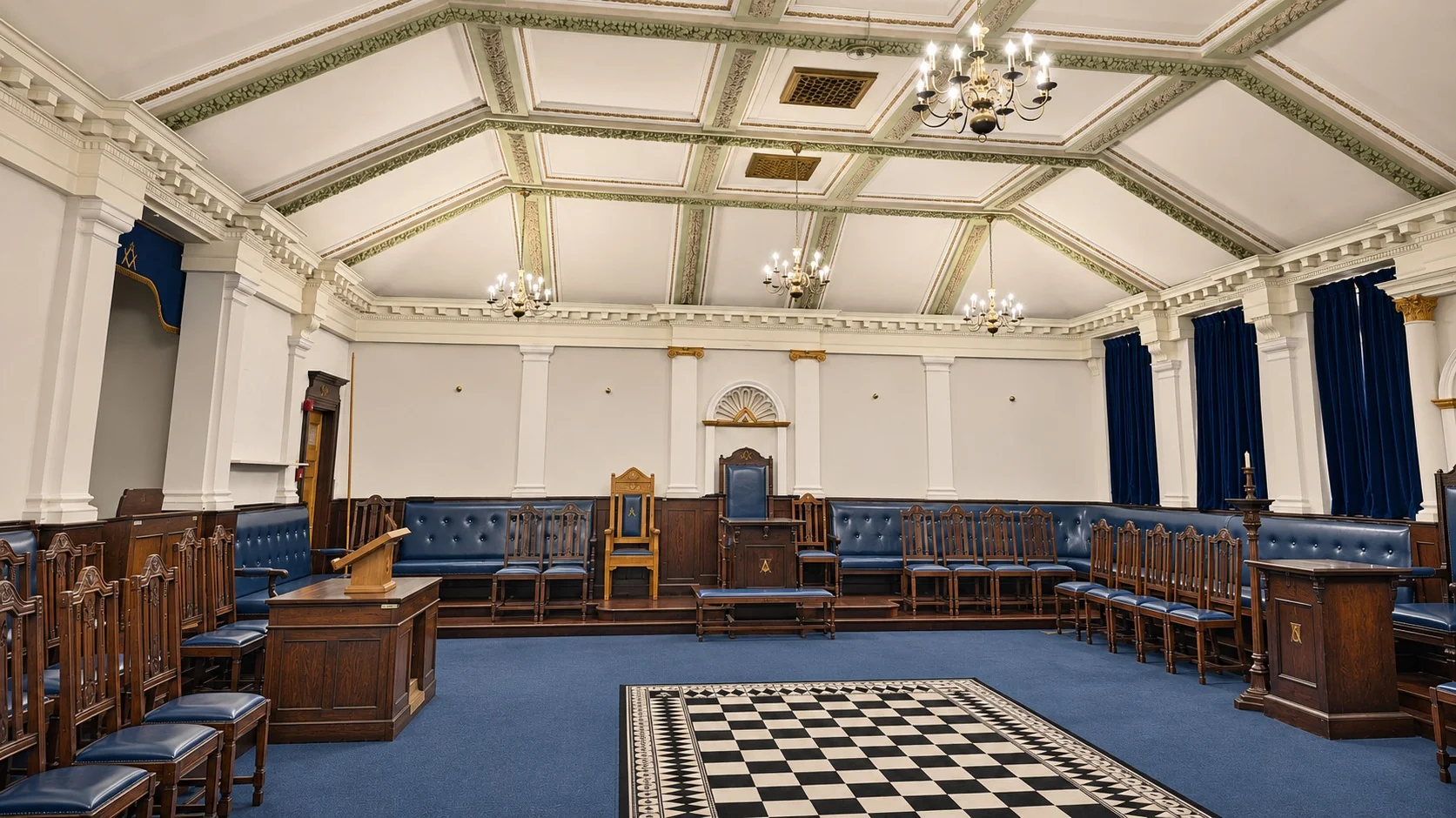
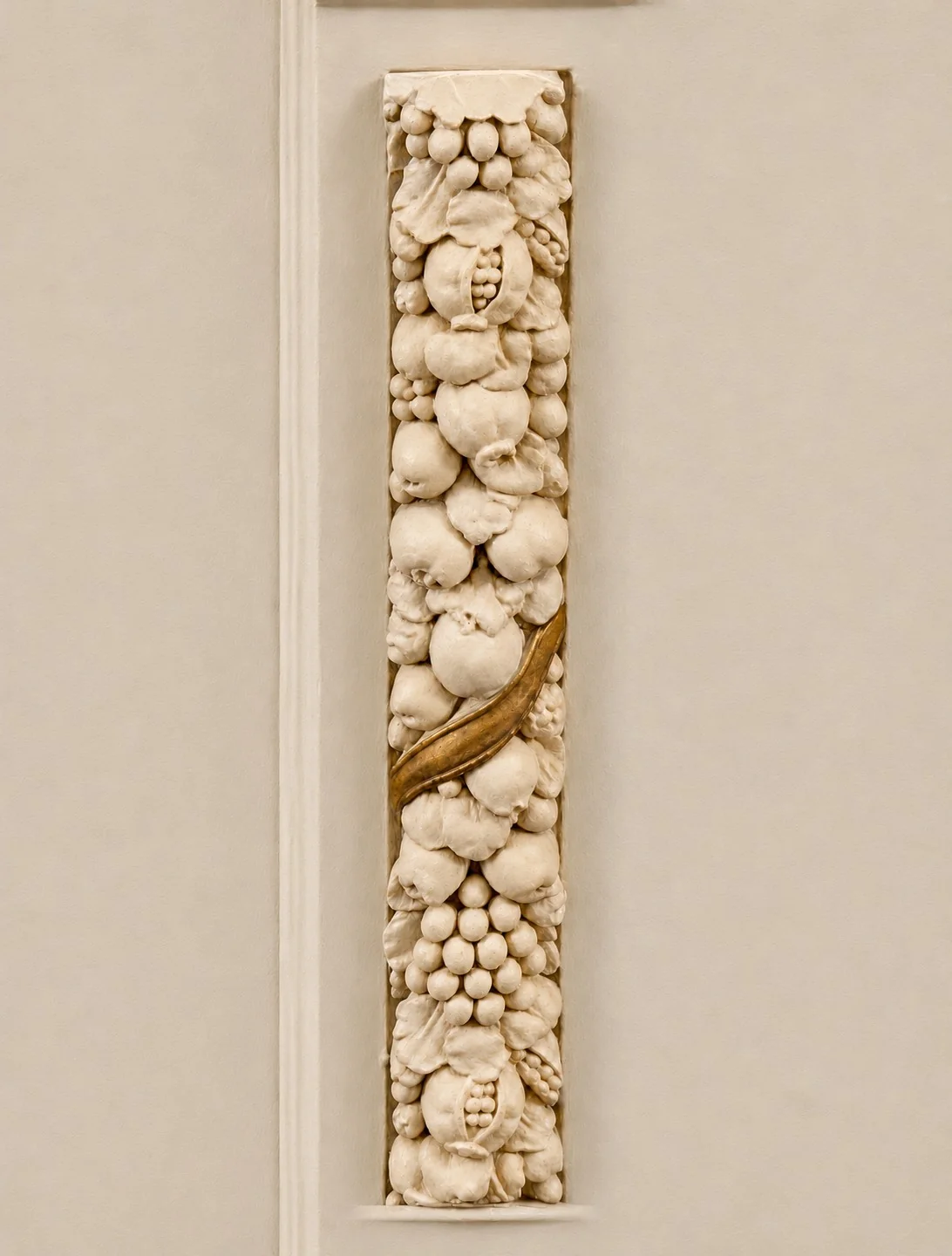
Look above the dining tables in the Corinthian Suite and the building rewards your attention. Fruit, foliage and finely modelled bands enrich the ceiling. Elsewhere, mouldings frame the rooms and leafy capitals mark the meeting of walls and cornices.
These details belong to a long decorative tradition. In a Masonic setting they can also prompt reflection, but an association is different from proof of an architect’s intention. No original decorative specification has yet been identified for the meanings discussed here.
Doric. Ionic. Corinthian.
The room names recall three classical orders of architecture. In Masonic symbolism, these orders connect with strength, wisdom and beauty. The Museum of Freemasonry describes that theme in Sir John Soane’s Ark of the Masonic Covenant, designed for the union of the Grand Lodges in 1813.
That is a useful way into the names at Wallasey, rather than evidence that Soane worked on this Hall or that every architectural feature follows the order named on the door.
The pomegranate and the idea of plenty.
Split, seeded fruit can be seen among the Corinthian ceiling’s ornament. The pomegranate has an established place in Masonic imagery, where its many seeds are associated with plenty, and in the biblical description of the pillars at King Solomon’s Temple.
Here it offers a way to think about abundance: knowledge shared, time offered and friendship extended. That is an interpretation for today, rather than a recovered explanation from the Hall’s designer.
Grapes, foliage and a shared table.
Bunches of grapes appear within the ceiling decoration. They can bring to mind wine, hospitality and the conversations that surround a meal. The visible ornament is certain; a specific original Masonic programme for every fruit is not.
The staircase ceiling continues the use of fruit and leafy forms. Not every rounded fruit can be identified confidently, and the decoration should be enjoyed without assigning an unsupported botanical or symbolic name to each detail.
Leaves at the tops of the walls.
In the Doric Suite, the leafy capitals use forms characteristic of acanthus ornament, familiar in Corinthian and Composite decoration. The room’s name does not make every detail an example of the Doric order.
The square and compasses.
Beyond the building’s ornament, Freemasonry has its own familiar language of tools. The square and compasses come from the work of the stonemason and are used as reminders of moral conduct and self-restraint.
Their meaning helps explain how Freemasonry uses the work of building as a way to think about character. Exploring that symbolism does not require treating every decorative feature in a Masonic building as a coded message.